Abstract: Integration of biology, medicine, and engineering and especially fabrication methods at the micro and nano scale offers tremendous opportunities for solving important problems in biology and medicine and to enable a wide range of applications in diagnostics, therapeutics, and tissue engineering. Specifically, microfluidics and Lab-on-Chip can realize applications in detection of disease markers, counting of specific cells from whole blood, and for identification of nucleic acids using sensitive and specific, point-of-care and personalized technologies. The implication of these technologies for advancing personalized medicine for detection of pathogens and stratification of sepsis would be discussed. Moving up the scale from nanotechnology and microfluidics, 3D bio-fabrication methods for biohybrid polymer devices can also be used to develop instrumented tissues for drug screening and biohybrid robotics. As these cellular machines increase in capabilities, exhibit emergent behavior, and potentially reveal the ability for self-assembly and self-repair, important questions can also arise about the ethical implications for this direction of research, which are very important to consider and address. These cellular systems present many opportunities in the next decade and beyond with potential applications in drug delivery, power generation, and other biomimetic systems.
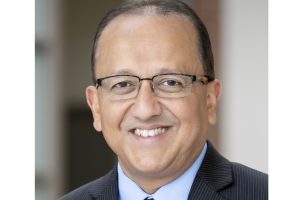
Bio: Rashid Bashir is Professor of Bioengineering, the Grainger Distinguished Chair in Engineering, and 15th Dean of Grainger College of Engineering at the University of Illinois Urbana-Champaign. He is also the Vice Chancellor for Strategic Partnerships Chicago.
After his Ph.D. from Purdue University in 1992, he spent 6 years at National Semiconductor Corporation rising to Sr. Manager where his team led the development and commercialization of 4 generations of microelectronics manufacturing technologies. He started his academic career at Purdue University where he spent 10 years. He was also Visiting Scientist at Massachusetts General Hospital and Shriner’s Hospital for Children and Visiting Professor of Surgery at Harvard Medical School. At the University of Illinois Urbana-Champaign, he was Director of the Holonyak Micro and Nanotechnology Laboratory, Head of Bioengineering Department, member of the core founding team and later Executive Associate Dean for the Carle Illinois College of Medicine, the world’s first engineering-based College of Medicine. He helped launch the Mayo-Illinois Alliance for Technology Based Healthcare and the Healthcare Engineering Systems Center and Jump ARCHES program with OSF Healthcare for collaborations between engineering, medicine, and social sciences. He was on the founding team of the Chan Zuckerberg Biohub Chicago awarded in 2023 and is member of the Executive Advisory Committee. As Dean of Grainger Engineering, he oversees the college with over 11500 undergraduates, 6500 graduate students, and over 550 faculty, some of the largest academic-corporate partnerships at UIUC with IBM, Foxconn Interconnect Technologies and others, and international partnerships with institutions in Singapore, Vietnam, Brazil, Taiwan, India, China, and Japan. Most recently he was involved in the launch of the Illinois Quantum and Microelectronics Park and now the Discovery Partners Institute as an AI hub, both in Chicago.
He is an internationally renowned scholar in micro-fluidics and nanotechnology for personalized medicine, and 3D bio-fabrication of biohybrid robotics. He has published over 330 journal papers and granted over 65 patents. He is fellow of IEEE, AIMBE, BMES, APS, AAAS, and RSC. He was elected to National Academy of Inventors in 2018, US National Academy of Medicine in 2023, and American Academy of Arts and Sciences in 2024. He is co-founder of Prenosis, Inc. and VedaBio, Inc, and is on board of Carle Health (Eastern Region), and P33-Chicago.
Host: Claire Hur
Reception to immediately follow in Bloomberg Student Center Room 204B